

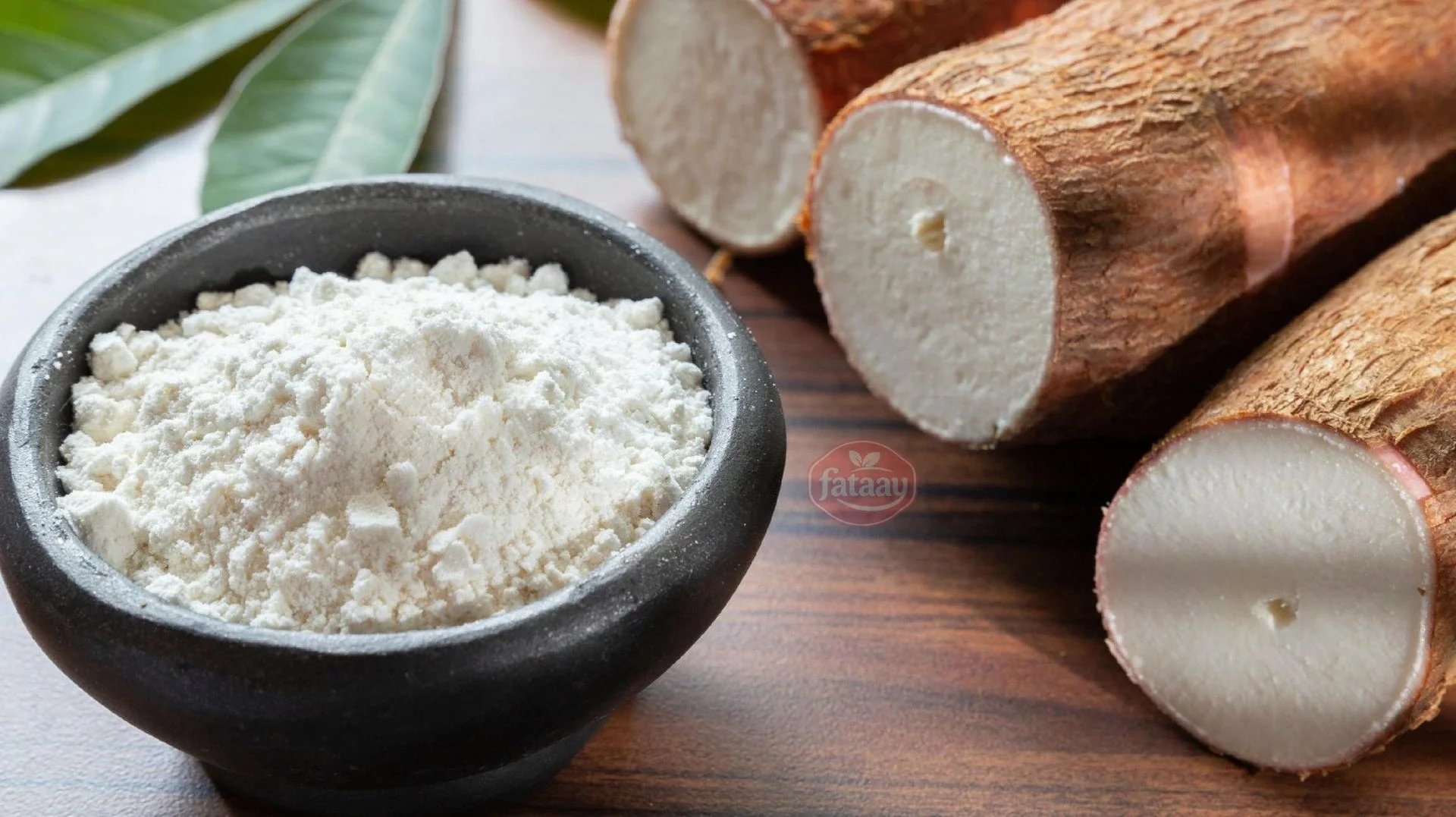
Cassava starch is widely used in food, paper, textiles, pharmaceuticals, and other industries. However, not all cassava starch has the same quality.
The quality of cassava starch depends on the cassava roots used, the processing method, its purity, and how it is stored. These factors affect the starch's appearance, performance, and suitability for different uses.
So, what makes cassava starch high quality? Let's look at the key factors
1. Quality of the Cassava Roots
The quality of cassava starch begins with the raw cassava roots.
Three important factors are:
Cassava variety: Different varieties have different starch contents and properties.
Harvesting age: Roots must be harvested at the right maturity. Over-aged roots may contain more fibre, making starch extraction more difficult.
Dry matter content: Roots with higher dry matter often provide better starch yields.
Choosing healthy, mature cassava roots helps improve starch production and reduce waste.
2. Processing and Extraction Method
Proper processing is essential for producing high-quality cassava starch.
The roots must be washed thoroughly to remove dirt, sand, and other unwanted materials. They are then grated, mixed with water, and processed to separate the starch from the fibre.
Using clean water, suitable equipment, and proper extraction methods helps produce cleaner and whiter starch.
Poor processing can leave fibre and other impurities in the final product.
3. Starch Purity and Moisture Content
Purity is one of the most important indicators of cassava starch quality.
High-quality starch contains a high percentage of starch and very little fibre, ash, protein, or other unwanted materials.
Moisture content is equally important. Excess moisture can encourage microbial growth, spoilage, and clumping during storage.
For example, some food-grade cassava starch specifications require at least 95% starch content and a maximum moisture content of 12%. However, requirements may differ depending on the product grade and buyer.
4. Whiteness, Fineness, and Viscosity
The physical properties of cassava starch also determine its quality.
Whiteness: Good-quality cassava starch is usually white and free from visible dirt or discoloration.
Fineness: The starch should have a fine, smooth texture without noticeable fibre or gritty particles.
Viscosity: This describes how thick the starch becomes when mixed with water and heated.
Viscosity is particularly important because different industries require starch with different thickening and binding properties.
A starch that performs well in food production may not necessarily meet the requirements of a paper or textile manufacturer.
5. Proper Storage
Even high-quality cassava starch can lose its quality if it is stored incorrectly.
Starch should be kept in a cool, dry, and clean environment. Packaging must protect it from moisture, insects, and contamination.
Proper storage helps maintain its whiteness, freshness, and functional properties until it reaches the customer.
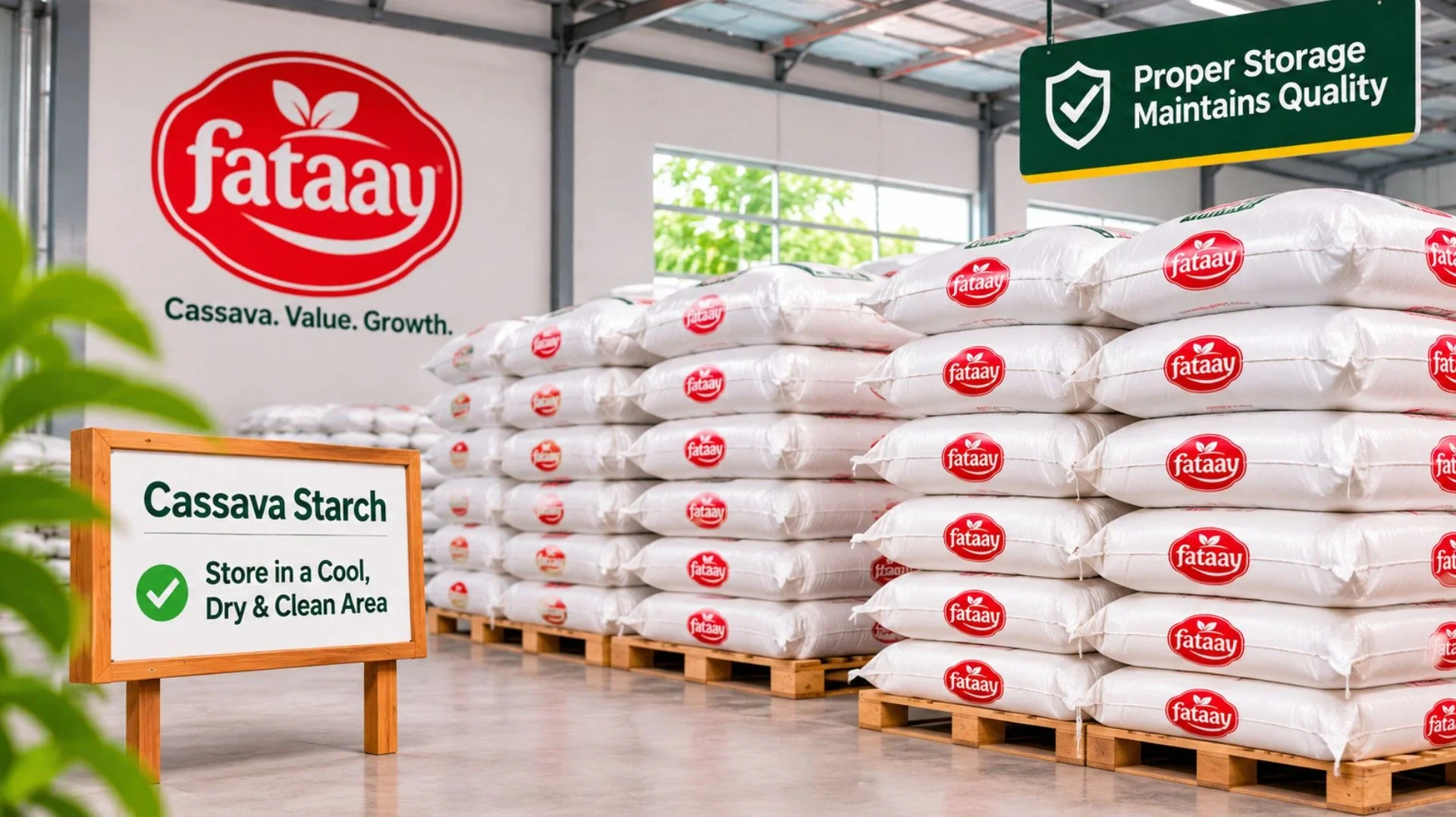
Proper storage helps maintain cassava starch quality and prevent moisture contamination.
Conclusion
The quality of cassava starch depends on more than just the cassava roots used. Good raw materials, proper processing, high purity, suitable moisture levels, and careful storage all play important roles.
For cassava starch manufacturers, maintaining these quality factors helps produce a reliable product that meets customer expectations and industry requirements.
At Fataay, we recognise the importance of these factors and are committed to applying good practices across our cassava starch production process to deliver quality and consistency.
High-quality cassava starch starts with good cassava roots and is maintained through proper processing, testing, and storage.