

Cassava Varieties in Nigeria (Benue & Middle Belt)
Cassava is one of the most important crops in Nigeria, supporting food security, household income, and industrial manufacturing. Nigeria has consistently ranked as the world’s largest cassava producer, making the crop a strategic raw material for food and agribusiness development. (fao.org)
From gari and fufu to flour, ethanol, animal feed, and starch, cassava is deeply woven into the Nigerian economy. In particular, Benue State and the Middle Belt have strong potential for large-scale cassava farming and starch processing due to fertile land, favorable climate, and active farming communities.
Why Benue State Is Important for Cassava Production
Benue State is widely known as the Food Basket of the Nation because of its strong agricultural output. Cassava is one of the key crops cultivated across the state for both household use and commercial processing.
The Middle Belt offers several advantages for cassava production:
Fertile soils
Good rainfall patterns
Long growing seasons
Large farming population
Access to regional markets
These conditions make Benue attractive for starch factories, contract farming, and agro-processing investments.
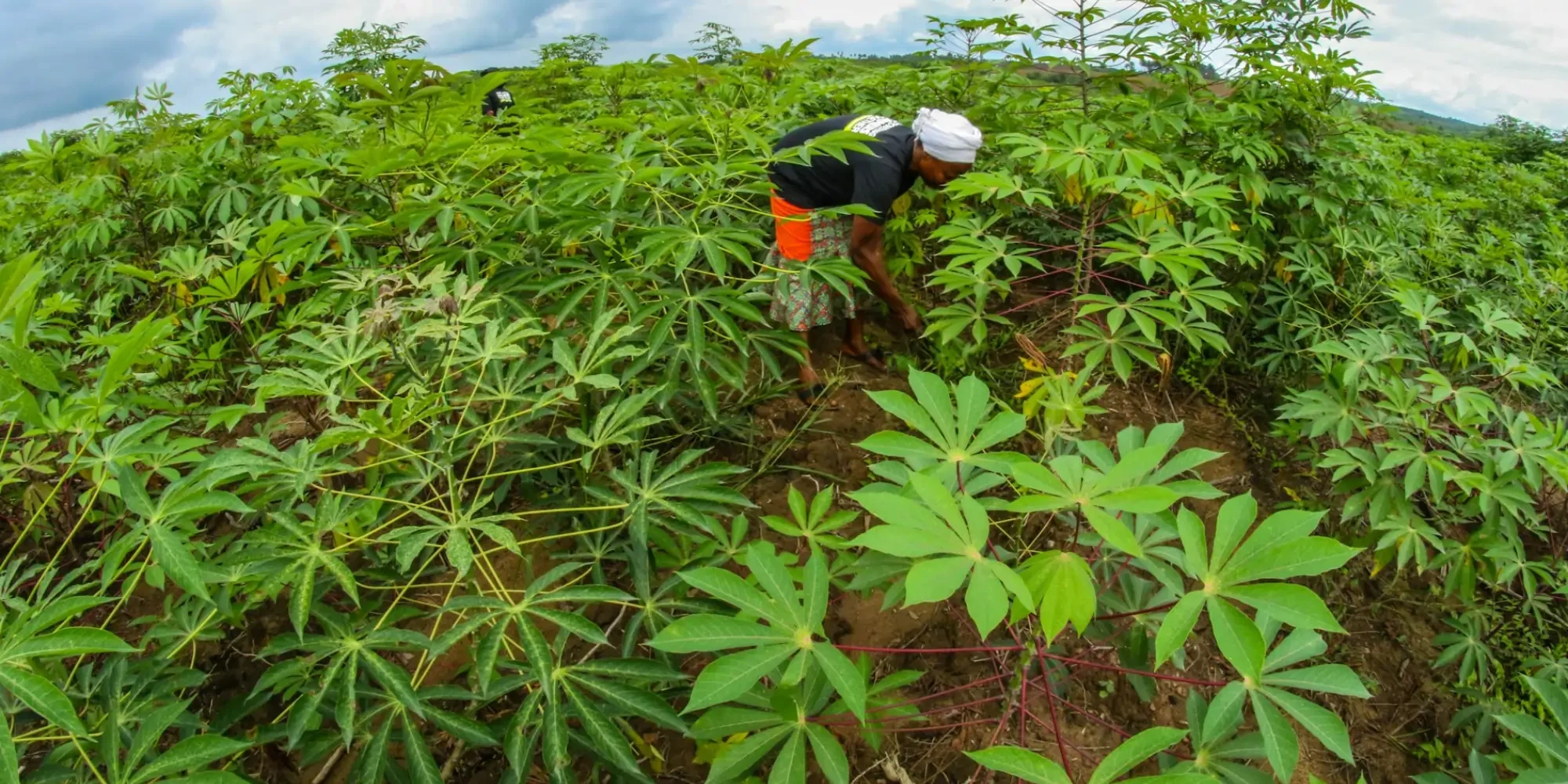
Female Cassava farmer weeding her farm by Tomiwa Ogunmodede
Improved Cassava Varieties in Nigeria and Local Varieties in Benue and the Middle Belt
Cassava varieties in Nigeria include both improved varieties developed by researchers and local varieties selected by farmers over time.
Research institutions such as the International Institute of Tropical Agriculture (IITA) and the National Root Crops Research Institute (NRCRI) have helped release many improved cassava varieties in Nigeria. These varieties are bred for higher yield, better starch content, early maturity, disease resistance, and improved food quality.
Popular improved varieties include:
TME 419
TMS 98/0505
TMS 98/0581
TMS 30572
NR 8082
TMS 01/1368 (Vitamin A / Yellow cassava)
TMS 96/1632
TMS 92/0326
NRCRI reports that joint efforts with IITA have led to the release of dozens of improved cassava varieties to Nigerian farmers, including biofortified and early-maturing types.
Alongside improved seeds, many farmers still grow local varieties valued for:
Taste
Adaptability
In-ground storage ability
Market demand
Familiarity in processing
Farmer-known cassava names in parts of North Central Nigeria include Akpu, Dangbo, Dan Warri, Oko Iyawo, BNARDA, Atakalogo, and Yanyume Wuhe, depending on the community, language, and local naming traditions.
What Makes a Good Cassava Variety for Starch Production?
Not every cassava root performs equally well for starch extraction. Processors often prefer varieties with:
High starch content
High dry matter
Large roots
White flesh
Easy peeling
Low fiber
Consistent yields
NRCRI lists high fresh root yield, dry matter, starch content, and extended in-ground storage among major breeding goals for cassava in Nigeria. (National Root Crops Research Institute)
Conclusion
Cassava is still one of the most important crops in Nigeria. It helps many families with food and also provides income for farmers across the country.
In Benue State and the wider Middle Belt, cassava farming is very strong because the land is fertile, rainfall is good, and many people are already involved in farming. This makes the area one of the top places where the crop is widely grown in Nigeria.
Improved cassava varieties like TME 419, TMS 30572, NR 8082, and Vitamin A cassava are helping farmers get better yields and grow healthier crops. Local varieties are also widely grown because farmers know them well and they perform well across different conditions.
With better farming methods and improved planting materials, cassava production in Benue State and the Middle Belt is expected to keep growing in the coming years