
Cassava Flour Processing: Step-by-Step Guide to Producing High-Quality Cassava Flour
Cassava flour processing is the process of converting fresh cassava roots into fine, shelf-stable, gluten-free flour. In Nigeria, where cassava is widely cultivated, processing adds significant value to the crop and creates opportunities for food manufacturing, baking, and export.
High-quality cassava flour is increasingly used in bread, pastries, snacks, noodles, and other food products. To produce flour that is safe, white, and long-lasting, processors follow several important stages.
What is Cassava Processing
Cassava flour processing involves cleaning, peeling, grating, dewatering, drying, milling, and sieving fresh cassava roots to produce fine flour suitable for food and industrial use.
Step-by-Step Cassava Flour Processing
Harvesting Fresh Cassava
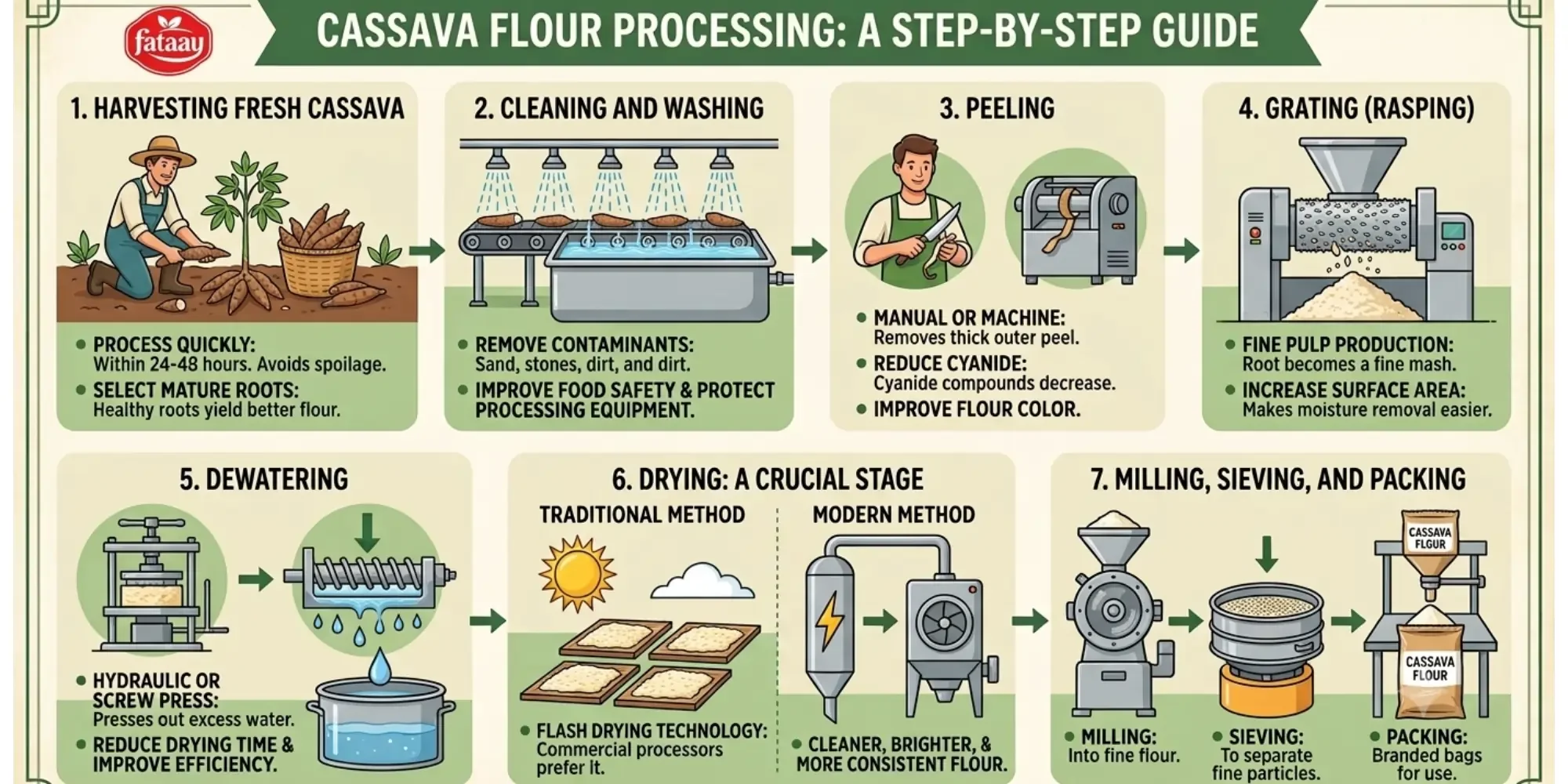
Fresh cassava roots should be processed within 24–48 hours after harvest because they spoil quickly. Healthy, mature roots produce better-quality flour.
Cleaning and Washing
The roots are thoroughly washed to remove sand, stones, dirt, and other contaminants. Proper cleaning improves food safety and protects processing equipment.
Peeling
The thick outer peel is removed manually or with cassava peeling machines. Peeling helps reduce naturally occurring cyanide compounds and improves flour color.
Grating (Rasping)
Peeled cassava is grated into a fine pulp using a rasper. This increases the surface area and makes moisture removal easier.
Dewatering
The wet cassava mash is pressed with a hydraulic or screw press to remove excess water. Dewatering reduces drying time and improves processing efficiency.
Drying
Drying is one of the most important stages.
Traditional method: Sun drying
Modern method: Flash dryers or mechanical dryers
Commercial processors often use flash drying technology because it produces cleaner, brighter, and more consistent flour.
Milling and Sieving
The dried cassava is milled into a fine powder and passed through a sieve to remove coarse particles, producing high-quality cassava flour.
Cassava Flour Processing Flow
Why Proper Processing Matters
Good processing practices help produce flour that is:
Safe for consumption
Low in cyanide
Bright and attractive
Long-lasting
Suitable for baking and industrial use
Business Opportunities in Nigeria
Nigeria is the world's largest producer of cassava, creating a strong market for cassava flour production. Demand is growing among bakeries, food manufacturers, supermarkets, and export buyers looking for gluten-free cassava flour.
For processors, investing in efficient equipment and quality control can significantly improve product value and market access.
Conclusion
Cassava flour processing transforms fresh cassava roots into a valuable, gluten-free product through washing, peeling, grating, dewatering, drying, milling, and sieving. With Nigeria's abundant cassava supply and rising demand for cassava-based foods, the industry offers strong opportunities for farmers, processors, and investors seeking to add value to the cassava value chain.