
Understanding the Cassava Value Chain in Nigeria
Nigeria is one of the most important cassava-producing countries in the world. In 2024, the country produced about 62.6 million metric tons of cassava, making it the largest producer in the world, according to FAOSTAT from the Food and Agriculture Organization (FAO). Millions of people eat cassava every day, but it is also useful for business and industry. To see its full potential, it helps to understand the cassava value chain in Nigeria: how cassava moves from farms to the final products we use.
What is the botanical name of cassava?
The botanical name of cassava is Manihot esculenta. It is a woody shrub in the spurge family (Euphorbiaceae) that is cultivated primarily for its starchy tuberous roots. Native to South America, cassava is now widely grown across tropical regions, with Nigeria being the world's largest producer.
What Is a Value Chain?
A value chain is the series of steps a product goes through before it reaches people. At each step, the product becomes more useful or valuable. For cassava, the chain starts with farming, continues through processing, distribution, and marketing, and finally reaches consumers.
Looking at the cassava value chain helps us see how cassava is grown, sold, and used. It also shows opportunities for new businesses in the cassava industry, such as processing companies that can create jobs and employment in rural areas.
Cassava Farming, Harvesting, and Supply
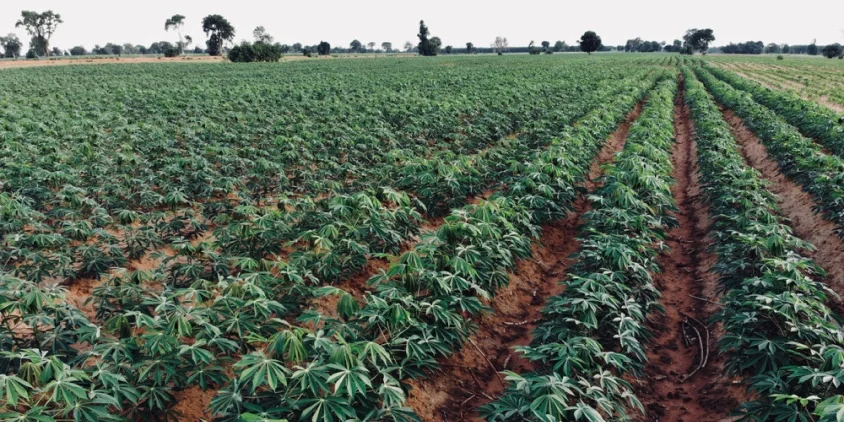
The cassava value chain in Nigeria starts with farming. Farmers plant cassava stems in the soil and wait for the crop to grow. Cassava usually takes 8 to 12 months to mature before it is ready for harvest.
Cassava farming is common in many parts of Nigeria, especially in rural areas. Farmers grow cassava because it can grow in different soil types and is an important source of food, income, and livelihood for millions of people.
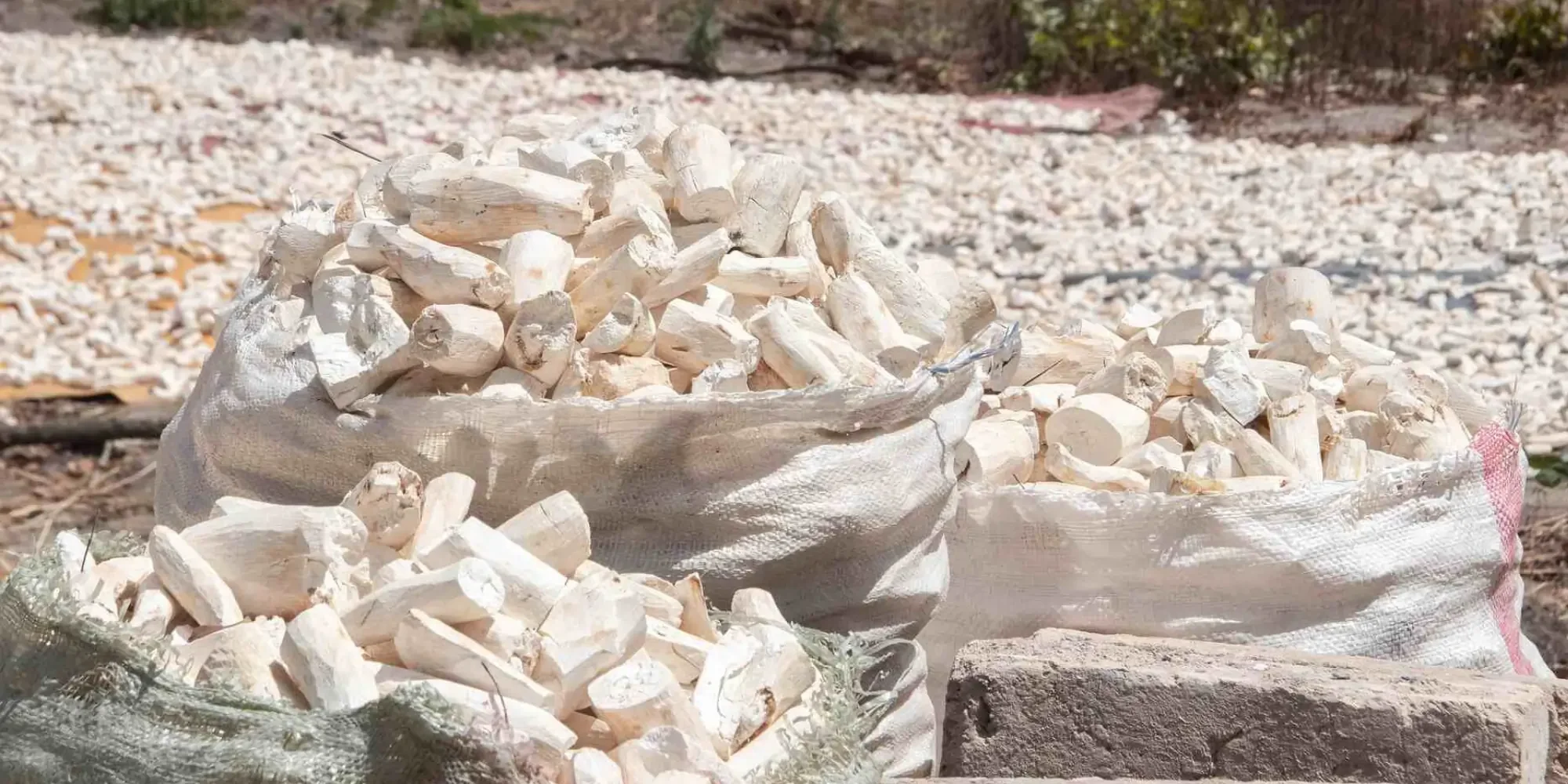
After harvesting, the cassava roots are ready for sale or further processing into products like garri, fufu, flour, and starch.z
After cassava is harvested, the roots do not stay fresh for long. Fresh cassava roots begin to deteriorate quickly, often within 1–3 days; if they are not processed soon after harvest, they undergo rapid post‑harvest deterioration (FAO, 2024; World Vegetable Center, 2024). This makes fast supply and processing critical for farmers and businesses.
Farmers often sell their cassava to:
Local traders
Small‑scale processors
Processing factories
These buyers then supply cassava to the next stages of the cassava value chain in Nigeria, including industrial processing into garri, fufu, flour, starch, and other products.
Efficient harvesting and supply help reduce waste, increase income for farmers, and strengthen the cassava industry.
Cassava Processing, Distribution, and Marketing
Cassava processing is the stage in the value chain where raw cassava roots are transformed into useful products for people and businesses. At this stage, cassava roots are turned into foods and industrial ingredients that last longer and have economic value.
Some of the most common cassava products in Nigeria include:
Garri — a dry, crispy staple eaten with soups
Fufu — a soft dough‑like food made from fermented cassava
Cassava flour — used in baking and cooking
Cassava starch — used in food, paper, textiles, adhesives, and more
Tapioca — a granular product made from cassava starch
These products make cassava safer to eat and longer lasting, and they can be sold in local markets, supermarkets, and to food companies. Processing also creates opportunities for businesses and exporters to reach regional and international markets.
Although Nigeria produces over 60 million metric tons of cassava annually, only a small portion is processed into industrial products. Most cassava processing in Nigeria is done at the small‑scale and cottage level, with a large share used for traditional foods rather than industrial goods. Estimates suggest that a majority of cassava (over 80–90%) goes into food use, and only a small percentage is used for industrial processing such as starch and high‑quality cassava flour (HQCF) for foods, pharmaceuticals, and other industries.
This shows that there is still a big gap in industrial cassava processing in Nigeria, even though the country has huge production potential.
Once cassava products are processed, they must be transported and marketed so consumers and businesses can buy them. This stage of the value chain ensures that cassava products reach the places where they are needed.
Processed cassava products are typically transported to:
Local markets
Supermarkets
Food processing companies
Wholesale and retail stores
Traders, wholesalers, and retailers all play a role in moving processed cassava products from factories and small processors to the final consumers and businesses.
In some cases, processed cassava products are exported to other countries, bringing foreign exchange earnings into Nigeria and expanding market opportunities beyond the local economy
Final Consumers and Why the Cassava Value Chain Is Important
The final consumers are the people or businesses who buy and use cassava products in Nigeria. Millions of households eat cassava daily, with staples like garri, fufu, and cassava flour forming a key part of everyday meals.
Cassava is not only a food; some processed products, such as cassava starch and sweeteners, are used by food manufacturers, industrial companies, and other businesses. This shows that the cassava value chain in Nigeria reaches both households and industries, creating opportunities for farmers, processors, and traders alike.
The cassava value chain in Nigeria is vital for the economy and for millions of people’s livelihoods. Farmers, processors, traders, and retailers all earn income from cassava, making it a key source of employment and revenue.
Beyond income, the cassava industry helps provide food security, as products like garri, fufu, and cassava flour feed millions of households every day. Cassava processing and value addition also create new business opportunities, support industrial growth, and strengthen Nigeria’s agricultural sector.
Conclusion
The cassava value chain in Nigeria covers multiple stages, from farming and harvesting to processing, distribution, and final consumers. Each stage is essential for turning raw cassava into useful products such as garri, fufu, cassava flour, and starch.
Understanding the cassava value chain helps people see how the cassava industry works, where opportunities exist for farmers, processors, and businesses, and how the sector contributes to food security and economic growth in Nigeria.